Estimated reading time: 8 minutes
You’ve probably already heard of thobe or are familiar with it. The thobe is a traditional garment timelessly worn by Muslim men. Historically worn in the Middle East, this garment is now worn in many parts of the world! But what truly makes the thobe a remarkable garment is the incredible diversity of styles it boasts. Each thobe style tells a unique story, reflects a specific cultural heritage, and serves a distinct purpose. Let’s discover different types of thobe.
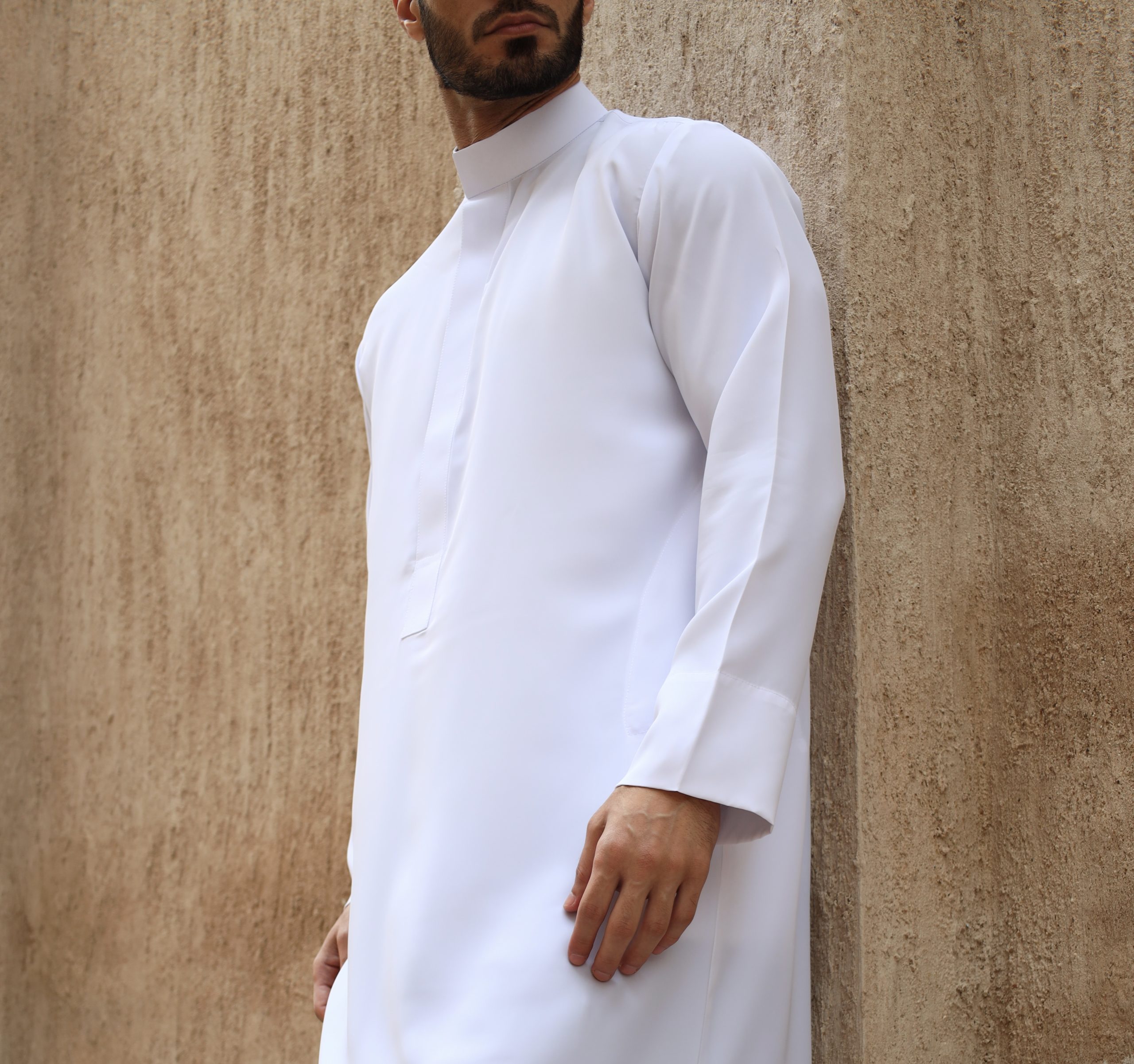
One of the most common thobe styles we see today is the Saudi thobe. Saudi Arabia has the largest cultural influence on the Muslim world; millions of people visit Saudi Arabia for the Hajj and Umrah pilgrimage each year. Likewise, there is the fame of the Saudi imams who lead the prayers, sporting Saudi-style thobes in the great Mosques of Makkah and Madinah.
In terms of design, the Saudi Arabian thobe includes a large and stiff collar that usually has two buttons. A front pocket is located on the left-and side above the chest. The most common colour is white, and other light, neutral colours. These colours are most effective in helping remain cool in the heat of the desert. However, other colours can be found, often made of thicker material, designed for the colder winter months. The fit of the Saudi Arabian thobe is usually tighter than other thobe styles.
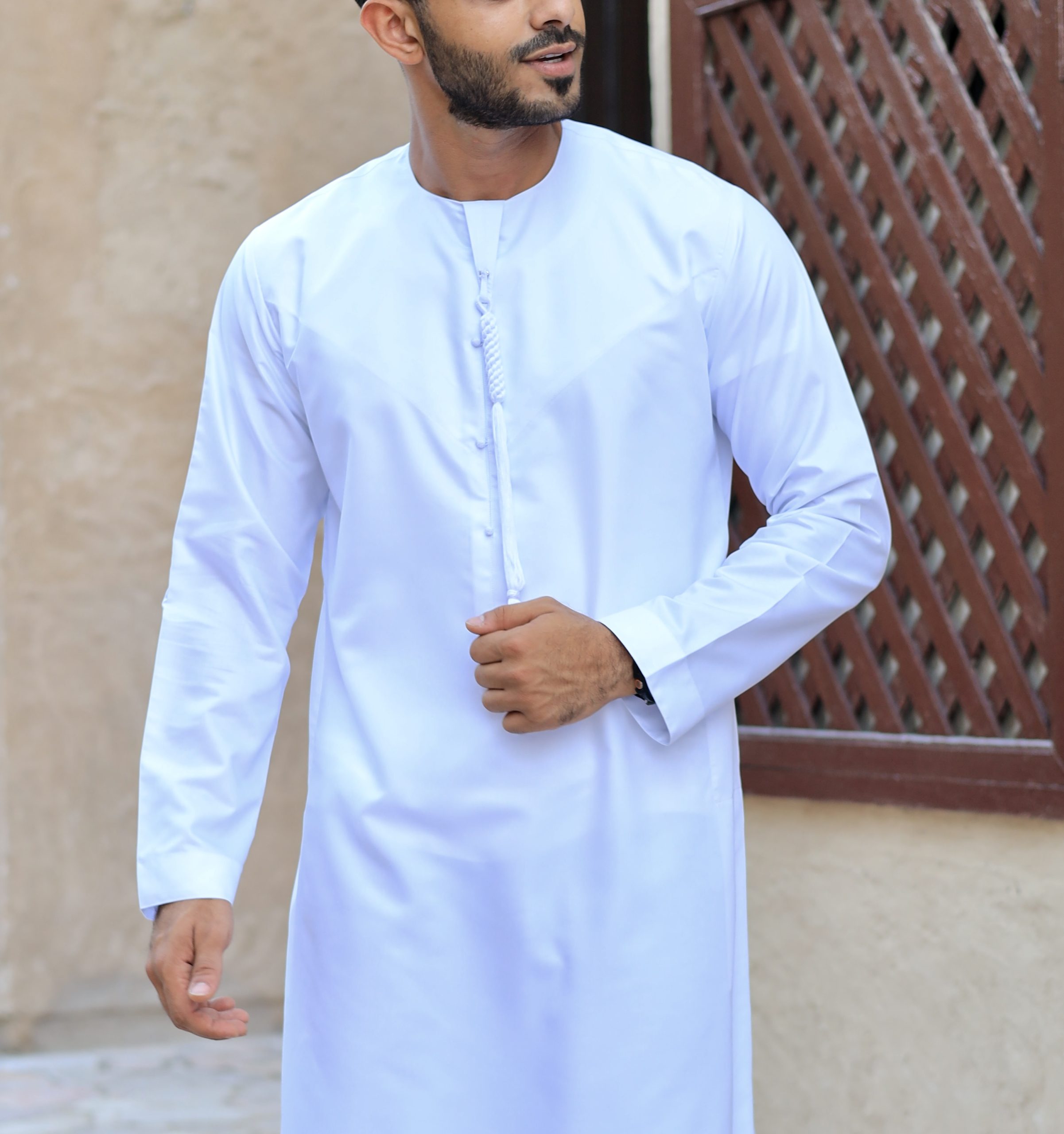
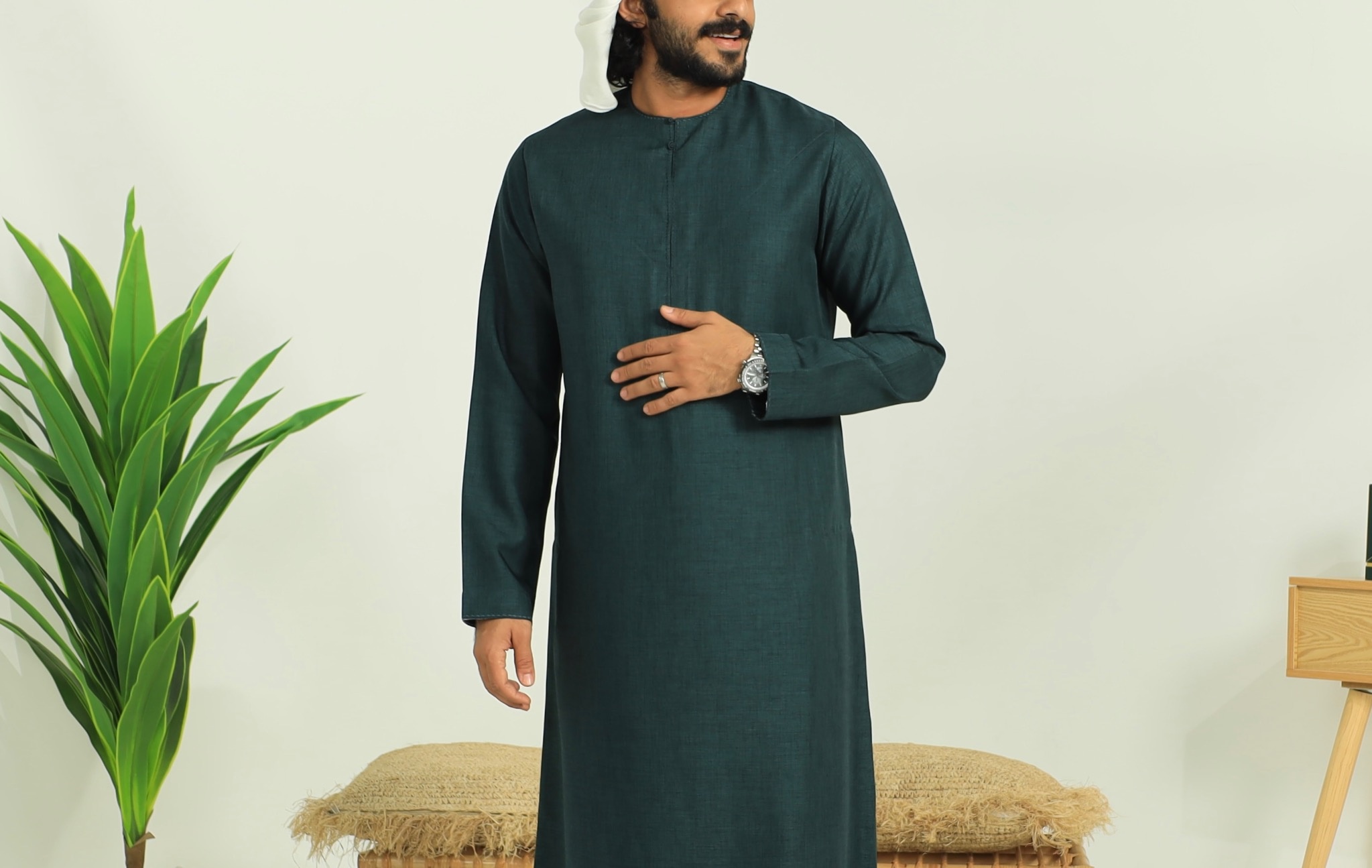
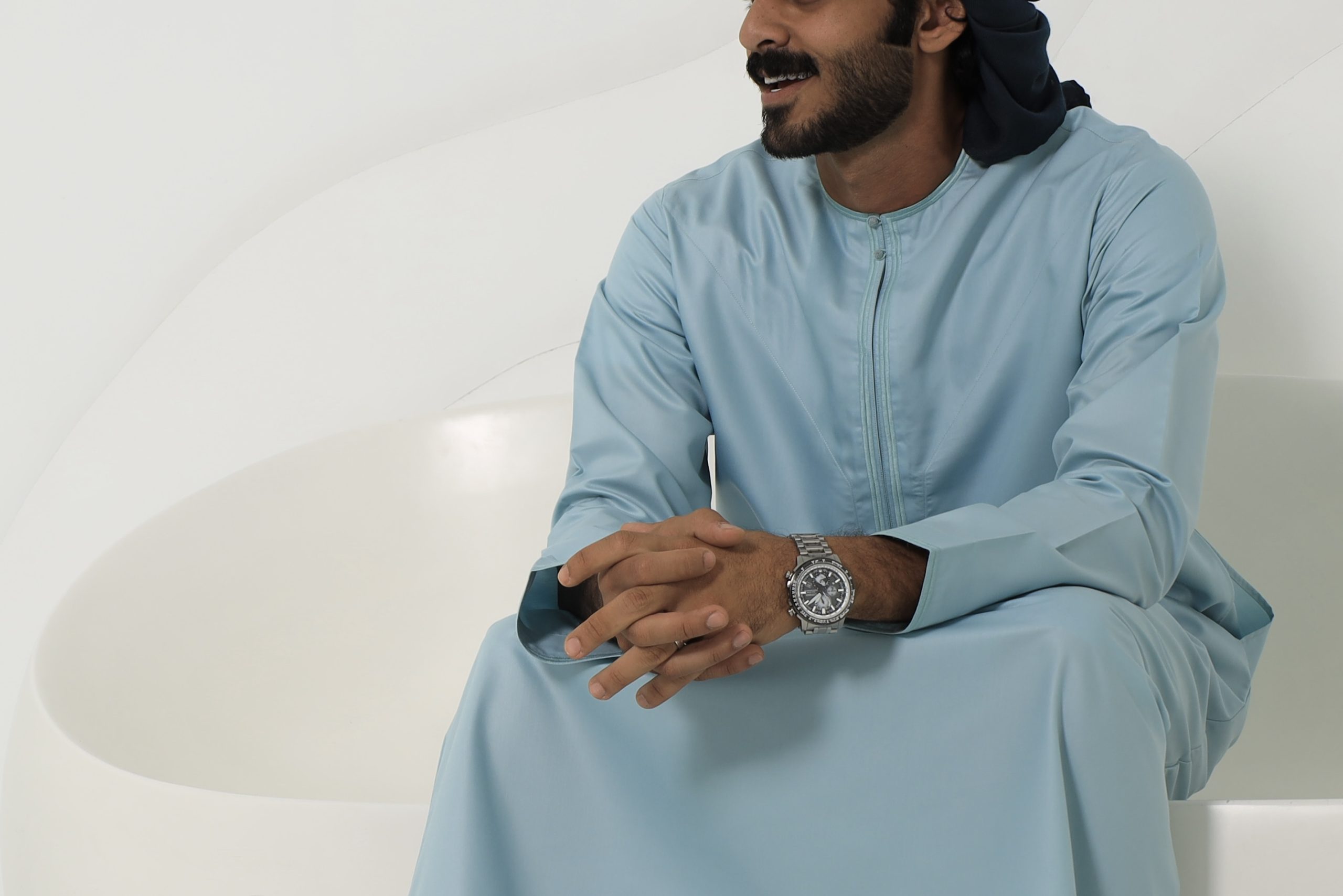
Standing out from other Thobe styles, Emirati Thobe and Omani Thobe designs share a unique collarless construction. A decorative tassel, a hallmark feature, hangs down from either the centre (Emirati) or the side (Omani) of the neckline. These types of Thobes typically lack a front pocket, contributing to a clean and streamlined silhouette. Interestingly, both Emirati and Omani Thobes are also known as “kanduras,” highlighting their close stylistic connection.
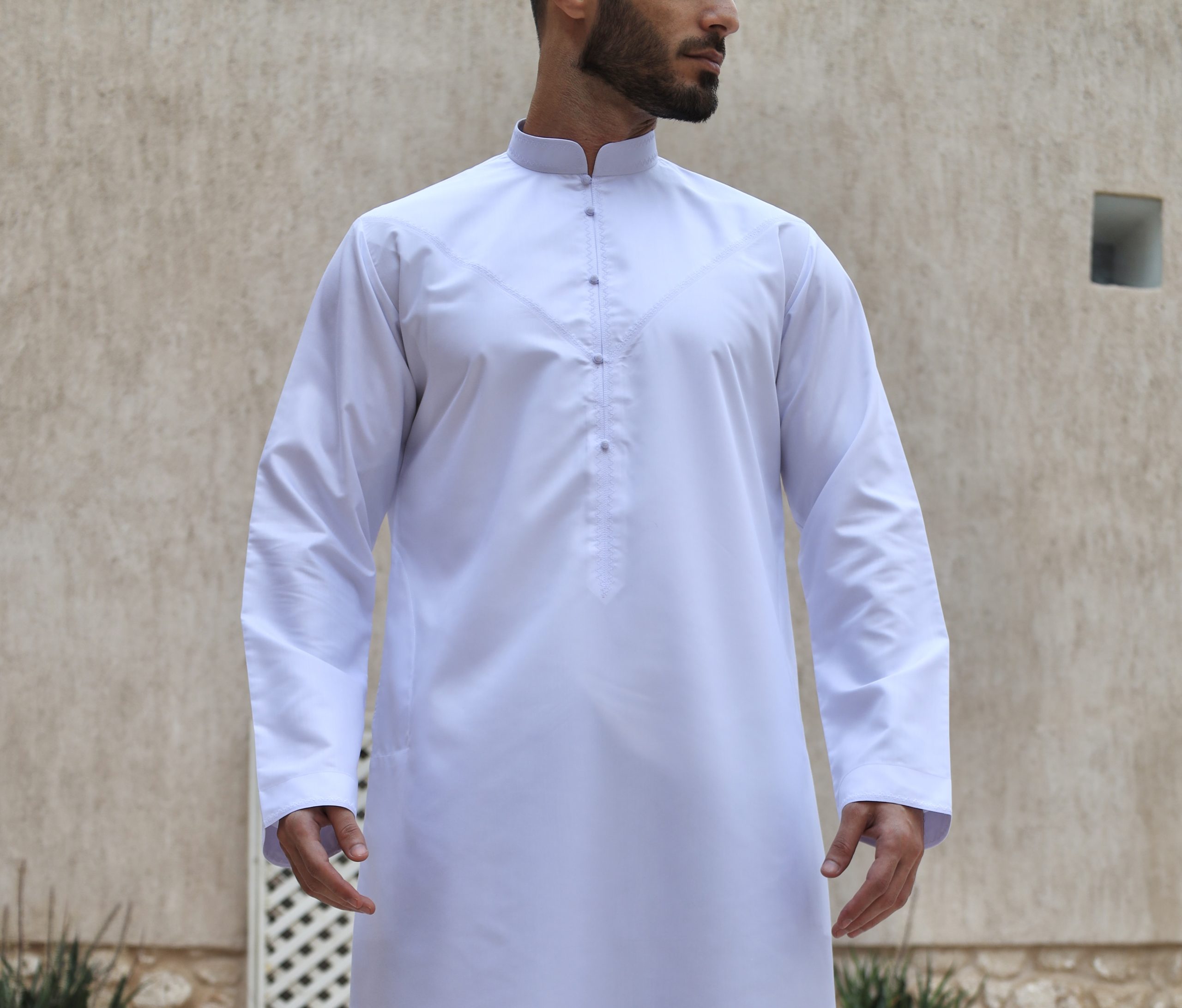
The thobes of the remaining gulf states seem to resemble the Saudi thobe style with minor differences between each. These thobe styles commonly have a collar, but with only a single button or no buttons at all, in contrast to the dual button collars in the Saudi style thobe. Qatari thobes can often be found in a shiny, polyester material.
Thobes in all these Arab countries are commonly also referred to as dishdashas. These types of thobes are typically paired with the iconic middle eastern shawl, known as the shammagh or ghutrah. Likewise, on formal occasions the thobe is worn underneath a bisht, which is a translucent wool cloak.
However in Oman and Yemen, other headwear is more popular, such as the colourful hat known as the kumma, that is commonly worn by Omani people. Also, there is the qawiq hat worn in Yemen.
Moroccan thobes have a very distinctive design. They’re usually referred to as jillabah or kaftans. The Moroccan thobe style is a very loose-fitting robe, with a pointed hood. Walking through a Moroccan bazaar, you’ll see these types of thobe being sold in a dazzling variety of styles and shades, with stripes of contrasting colours. They’re quite adventurous with comparison to thobes from the other Arab countries which have a relatively formal design and a more tailored fit than their Moroccan counterparts.
The kurta is the common style of thobe worn by people of South Asian descent. It’s also known as a kameez, and when paired with matching trousers, the resulting outfit is called shalwar kameez. The origin of kameez comes in the Arabic work qamis. This has been explained in this blog post: What Are Thobes?
Kurtas are available in many different colours and styles, as well as the standard white. They’re shorter than the traditional Arab thobe, usually around knee length or slightly longer. A slit in the sides of the kurta from the waist down allows the wearer more mobility than a traditional thobe.
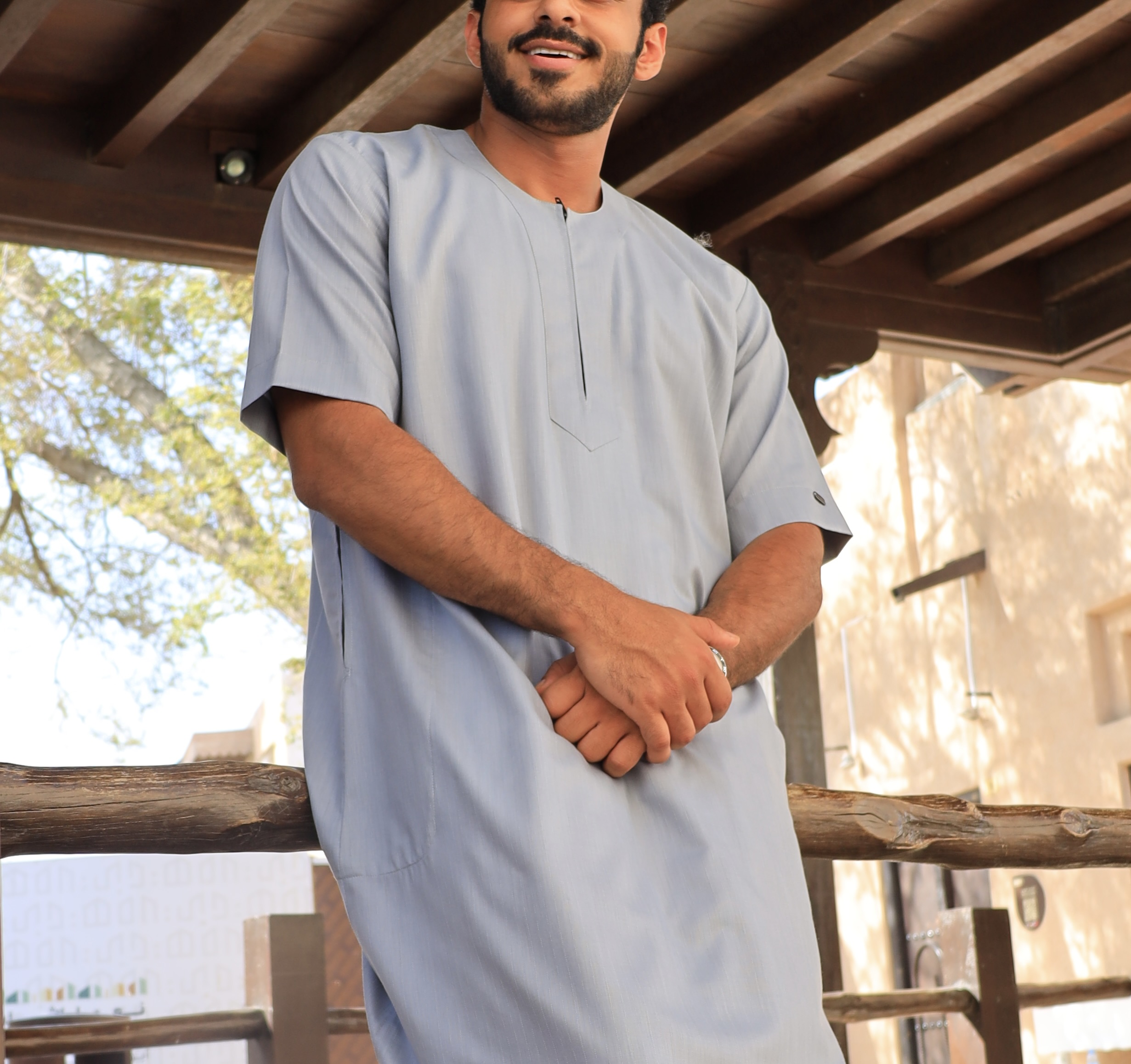
Most commonly seen in Western countries, this style of thobe takes the traditional Arab thobe and adds modern features such as ribbed cuffs, zips or drawcords for added comfort and practicality. In terms of style, the designs are more subversive. In comparison, to the more consistent patterns and colours of traditional Arab thobes. Often, this is done by mixing the traditional thobe with design elements from casual clothing. For example, by including sections of darker colours or patterns to provide contrast on a light coloured thobe. Details such as bold stripes along the sleeves, or in the cuffs and collars can be included too. The colour palette in the casual/urban-styled thobes is typically more neutral, including greys, blacks and browns. These types of thobes pair well with other types of modern, casual clothing.
Thobe’s journey from a simple outfit to a diverse collection of styles reflects the rich cultural tapestry of the Muslim world. Each thobe style, with its unique features and history, offers a window into a specific region’s traditions and preferences. Whether you’re drawn to the timeless elegance of the Saudi thobe or the vibrant energy of the Moroccan design, there’s a thobe out there that perfectly complements your style.
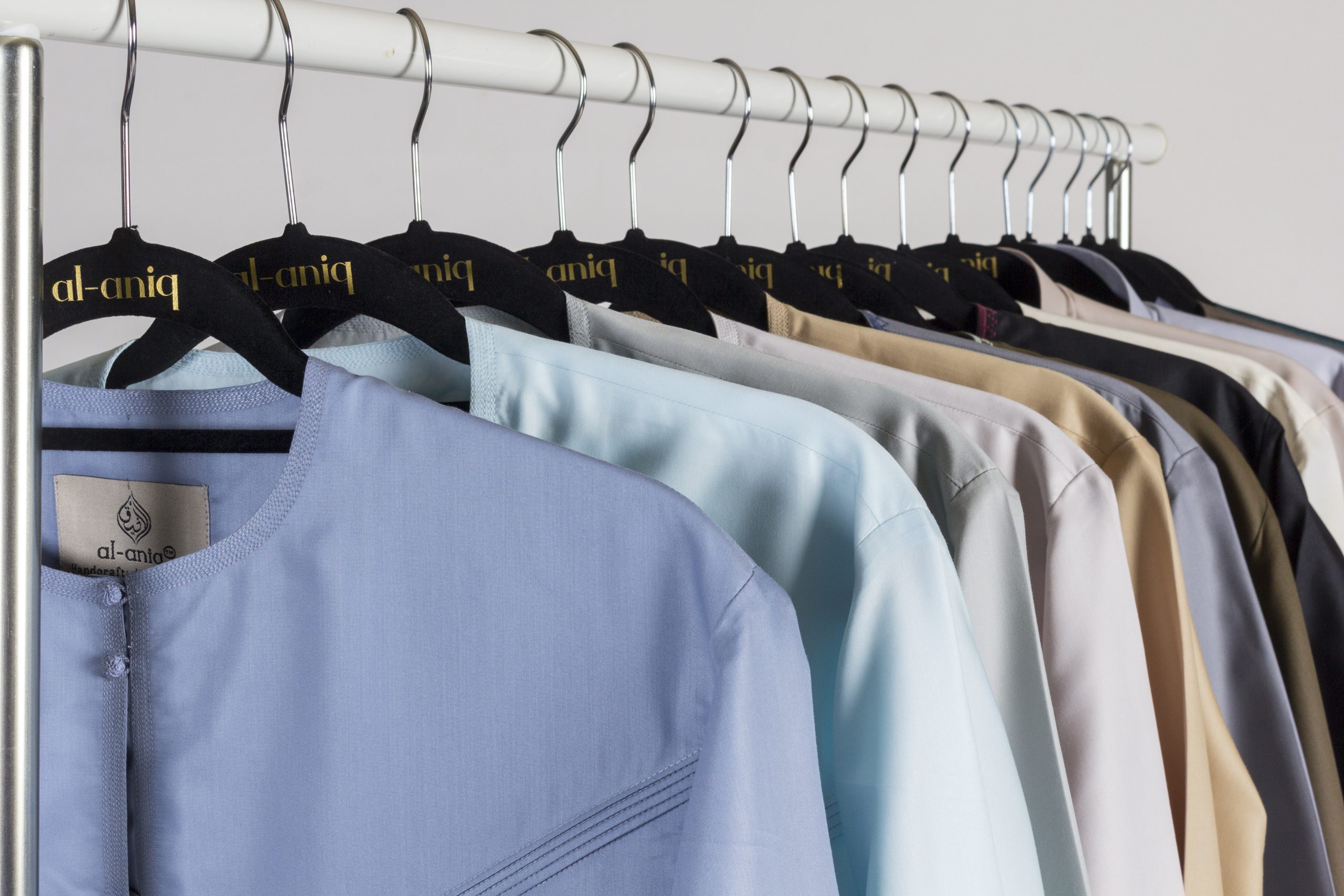
Looking to explore the variety of thobe styles? Visit Al-Aniq website to discover a wide range of men’s thobes for every taste and occasion. We offer traditional and contemporary styles, ensuring you find the perfect thobe to express yourself.